
By Tatenda Chitagu
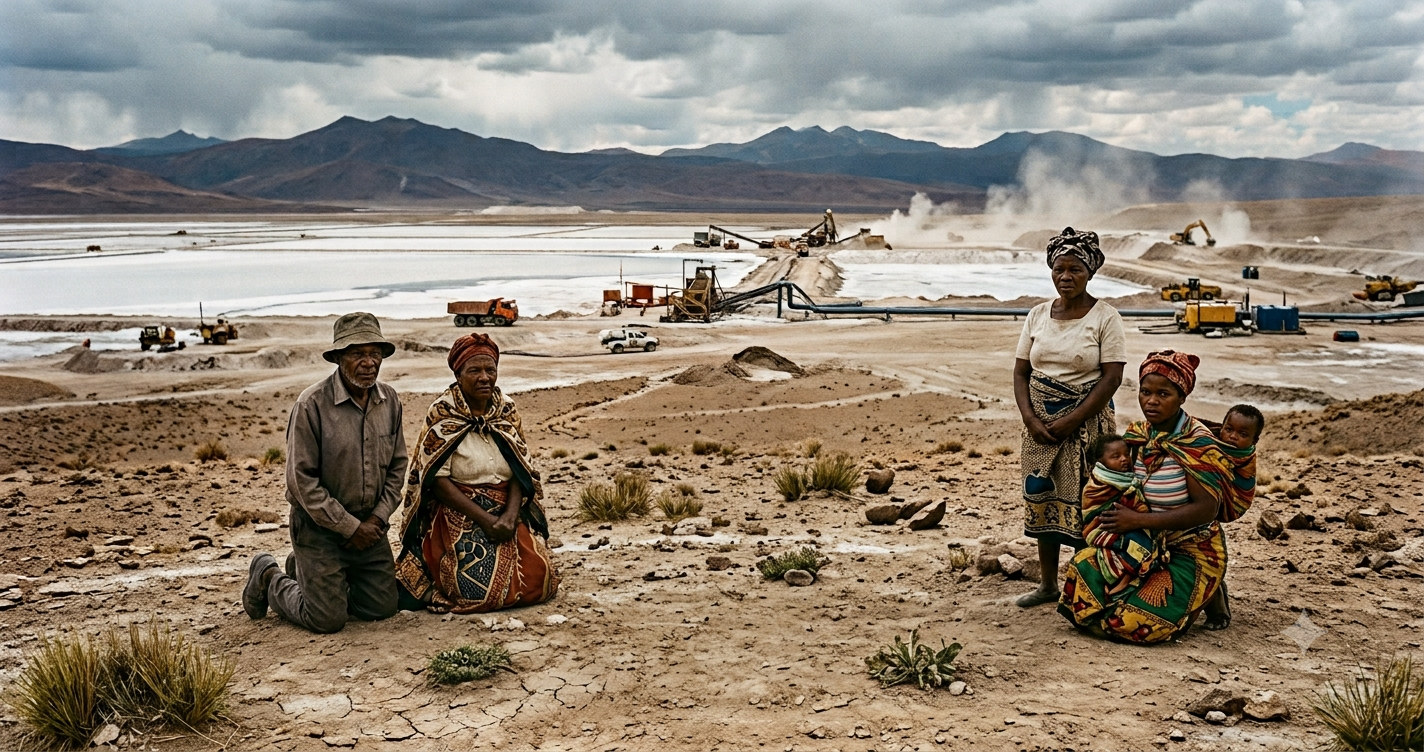
While Zimbabwe’s vast lithium reserves have positioned the country as a potential strategic player in the global Just Energy Transition, a comprehensive investigation by EnviroPress Zimbabwe reveals that communities in the lithium-rich districts of Bikita and Mberengwa bear a heavy cost of exploitation, displacement, and systematic exclusion.
These are part of the findings detailed in two research documents produced by EnviroPress Zimbabwe under the project titled Harnessing Efforts to Address the Adverse Impacts of Mining Investments on the Rights of Women, Indigenous Groups, and Local Communities while Advancing a Just Energy Transition in Southern Africa, implemented by the Southern Africa Trust.
The research documents – the Bikita-Mberengwa Lithium Extraction Public Perception Survey Report and the Zimbabwe Transitional Minerals Governance Framework Report – reveal a pattern of “crass extractivism” which refers to resource extraction carried out with little to no regard for environmental sustainability, public accountability, or local community development.
Bearing the Brunt of Exploitation
The survey details stark gender disparities within the lithium mining sector, where the vast majority of jobs accessible to local villagers are low-skilled and poorly remunerated. Women are overwhelmingly concentrated in the most menial roles such as cooking, cleaning, and laundry services while skilled production line positions and semi-skilled roles like operating heavy machinery are almost exclusively reserved for men.
Female respondents in the Bikita district openly alleged a high prevalence of sexual harassment and the existence of “sex-for-jobs” practices. The report highlights that these allegations point to a deeply exploitative environment for women seeking employment, compounded by widespread concerns over low wages and unjustified dismissals across both the Bikita and Mberengwa districts.
Similarly, the governance report notes that women disproportionately bear the daily burden of mining disruptions, which severely impact water collection, childcare, and subsistence farming. Reports also indicated a rise in gender-based violence and the exploitation of young women in both districts.
Displacement and Marginalisation
The rush for lithium has driven forced evictions and the erosion of communal land rights, with families from nine villages in Bikita West being displaced to clear space for Bikita Minerals’ expansion, which began in 2022. Although some victims were promised fair compensation and jobs, these pledges were widely ignored, leaving families without their ancestral land or their livelihoods.
The survey report stresses that this constitutes “a severe violation of indigenous land rights and cultural heritage.” The tragedy is further compounded by the illicit exhumation of ancestral graves in both Bikita and Mberengwa, a violation of cultural heritage.
According to the governance report, community displacement remains widespread because mining operations are frequently initiated without adequate consultation, compensation, or relocation support. The consistent failure to uphold Free, Prior, and Informed Consent (FPIC) standards has alienated affected communities from any of the purported benefits of mining development.
The “Impossible” Just Transition
The investigation also revealed that the core concept of a Just Energy Transition, which refers to the shift towards green energy that is equitable and inclusive, remains entirely unfamiliar to most residents, who have been shut out of both national and global dialogues. Instead, locals are left to contend with contaminated water sources, deforestation, heavy dust pollution, and the daily stress of rock blasting.
Respondents were largely not well-informed on the complexities of the Just Energy Transition, with many characterizing it simply as a need for universal access to electricity.
The governance report notes that while Zimbabwe possesses crucial natural resources, its current governance architecture suffers from a disjointed legislative framework, weak enforcement mechanisms, and a lack of community participation in decision-making—factors that collectively prevent the benefits of this developmental boom from reaching local citizens.
Recommendations for Reform
To ensure lithium mining becomes beneficial rather than destructive to host communities, urgent legislative reforms are necessary. The reports suggest replacing the outdated Mines and Minerals Act with modern legislation that enforces strict Environmental, Social, and Governance (ESG) standards while mandating binding community benefit-sharing agreements.
At the operational level, mining companies must implement transparent hiring practices that prioritize qualified locals, actively promote women into technical and leadership roles, and strictly enforce zero-tolerance policies against discrimination and sexual harassment.
To safeguard local ecosystems, the Environmental Management Agency (EMA) must receive adequate funding and be insulated from political interference. This structural independence is crucial to ensuring the agency enforces genuine Environmental Impact Assessments (EIAs) rather than treating them as mere box-ticking exercises.
Finally, the reports emphasize that Zimbabwe must move beyond the export of raw minerals by developing local processing capacity. In doing so, the nation can create skilled domestic jobs and capture far greater economic value from its strategic resources.
The research documents are accessible via the Dropbox link: