
Sharon Chikowore
CHINHOYI-FOR 15 years, she rebuilt her life one day at a time.
When her husband left for South Africa in 2011 in search of work, their daughter had just started walking. He promised to send money home and return once he had found his feet.
At first, Sekai Dongo (not a real name) waited. She expected a phone call, a message or money to help raise their daughter. None came.
As the months turned into years, she stopped expecting him to return. She earned a living selling second-hand clothes at Chinhoyi’s town market, using every dollar she made to pay rent, buy food and keep her daughter in school.
“I cried for a long time. Eventually, I accepted that I was on my own,” she said.
Their daughter grew up without knowing her father. The only stories she heard about him came from relatives, some saying he remarried and started a new family there.
See also : https://humfoz.org/2024/11/26/how-usaid-emergency-drought-relief-programs-saved-lives-in-masvingo/
https://www.newsday.co.zw/news/article/111027/jilted-xenophobia-victim-hangs-self
Earlier this week, Sekai’s life took an unexpected turn. Her husband returned home after being caught up in the latest round of South African immigration sweeps and deported back to Zimbabwe.
He arrived carrying a cardboard box containing the few belongings he had managed to keep.
While the public discussions focus heavily on the logistics of the border, a quiet undercurrent of anger and deep resentment is simmering inside different homes. The families who were left behind are asking painful questions that society is too afraid to voice.
Being re-united with her husband after so many years stirred emotions Sekai thought she had buried.
“People tell me I should simply forgive him because he is my husband. But where was he when our daughter was sent home from school because I could not pay her fees? Where was he when we struggled to put food on the table?” she said.
Now that he is back, she finds herself sharing a home with someone she no longer knows.
“I am not refusing to accept that he has returned. But you cannot disappear for years and expect everything to be the same,” said Sekai.
Their daughter, now a teenager, is also struggling to adjust.
“She does not know how to relate to him. To her, he is not the father she grew up with because he was never there.”
The reunion has brought uncertainty rather than celebration.
Simple conversations have become awkward, while everyday routines now feel unfamiliar.
Despite the emotional strain, Sekai says she has chosen not to respond with anger.
“I will treat him with respect because that is the kind of person I am. But forgiveness cannot be demanded. It takes time, and some wounds do not heal easily,” she said quietly.
For now, the family is trying to find a way forward after years of separation.
Whether the years they lost can ever be recovered remains a question only time can answer.
Sekai’s predicament miorrors thousands of women turned into economic widows after their husbands migrated to South Africa years back and went incommunicado.
Most of the women are from areas bordering South Africa in Chiredzi and Matebeleland. They feel disconnected from their ‘husbands’ who had been away for so many years without returning or supporting their families.
A marriage counsellor and pastor said an uncertain reunion following years of spousal abandonment involves deep emotional trauma, sometimes called Spousal Abandonment Syndrome.
She said that for the partner left behind, it triggers intense shock, betrayal, and a shattered sense of security.
“Navigating this situation requires careful boundaries, legal awareness, and emotional protection,” the counsellor said, preferring anonymity as she is not supposed to talk to the press due to protocol.
“Managing the complexities of a sudden return or a potential reunion involves the following steps: Before engaging or agreeing to a reunion, define your non-negotiables. Clearly state what you need in terms of honesty, accountability, and time to process the betrayal before making permanent decisions.
“Recognise that the confusion, anxiety, and distrust you feel are completely valid reactions. Seek counselling or connect with support groups to process the emotional toll. Marital abandonment carries legal implications. Reach out to a family law attorney to understand your rights regarding legal separation, divorce, child support, or protecting your financial asset,” she said.
But for many economic widows like Sekai, the re-union was just abrupt-just like the way her husband disappeared in thin air, only to resurface now. -New Ziana, additional reporting and editing by HuMFOZ)
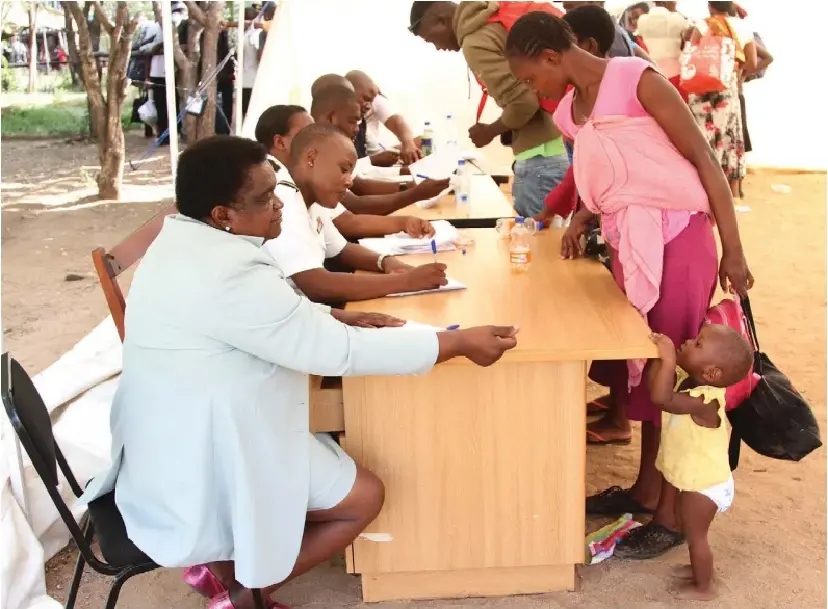
*Banner Image: In this file image, Zimbabwean victims of xenophobic violence in South Africa go through documentation processes at Beitbridge border post in 2015 (Picture by Tatenda Chitagu)